Home / Buying guides / Cardio
Home fitness
Best exercise bikes for home in the UK
By the buychecked team · Updated 9 October 2026 · Prices refresh daily from the retailer feed
For most people buying an exercise bike for home, the ProForm Pro Trainer 500 is the best balance of ride quality, features and price: an 11 kg flywheel, 16 levels of computer-controlled magnetic resistance and iFIT workouts through your own tablet, at a mid-range price. If your budget is tighter, the Spirit Fitness DBU40 upright bike offers 32 resistance levels and a 10 kg flywheel. If you want a big built-in screen and studio classes, the NordicTrack 24 Studio Cycle is the premium pick.
Exercise bikes come in four broad types: upright bikes with a comfortable seat, spin-style indoor cycles that feel closer to a road bike, recumbent bikes with a supported, laid-back seat, and compact folding bikes for small spaces. Our seven picks cover all four, from budget to premium, and the buying advice below explains what flywheel weight, resistance type and app support actually mean for your ride.
How we chose
We have not tested these bikes ourselves. We shortlisted them by comparing the published specifications, features, price and the retailer's product information across every exercise bike and indoor cycle in our cardio range. We focused on flywheel weight, resistance type and number of levels, built-in programmes, seat and riding position, and whether app features depend on a paid subscription or work with open apps like Zwift and Kinomap. Where the retailer does not list a spec, such as maximum user weight, we say so and suggest checking it before you buy.
1. Best overall
ProForm Pro Trainer 500 Indoor Cycle
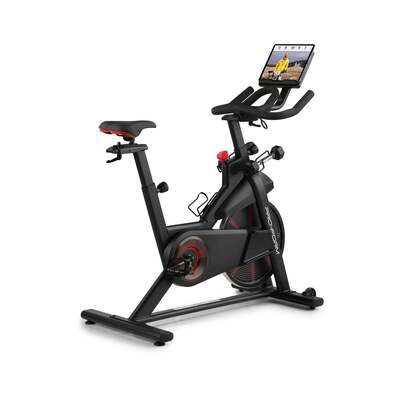
£599.00 at Sweatband · best for most homes wanting guided workouts
The ProForm Pro Trainer 500 sits in the sweet spot of the range. Its 11 kg flywheel is heavier than most budget bikes, which generally means a smoother, more even pedal stroke, and the 16 levels of Silent Magnetic Resistance are computer-controlled. That last point matters: with iFIT on your own tablet (30-day trial included), trainers can change the resistance for you during a class. It also comes with a pair of 1.4 kg dumbbells for upper-body work during rides. The display is a simple one-window LCD, so most of the experience runs through your own device.
✓ Pros
- 11 kg flywheel for a smooth ride at a mid-range price
- Computer-controlled resistance can be adjusted automatically by iFIT
- Dumbbells included
- Integrated tablet holder
✕ Cons
- Basic one-window LCD
- Interactive classes need iFIT after the trial
- 16 resistance levels is fewer than some rivals
2. Best budget
Spirit Fitness DBU40 Exercise Bike
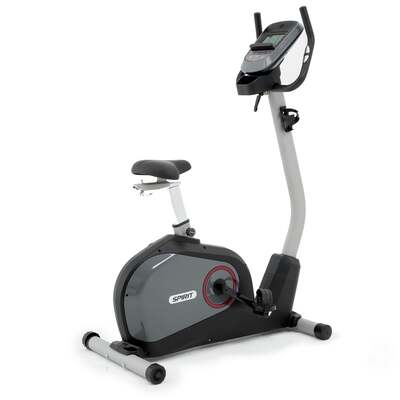
£299.00 at Sweatband · best for comfortable, no-fuss upright riding
The Spirit Fitness DBU40 is a sensible budget choice for people who want a traditional upright bike rather than a spin bike. You get a 10 kg flywheel, 32 levels of computer-controlled magnetic resistance and 9 built-in workouts, which is a lot of adjustment for the price. The oversized cushioned seat adjusts both vertically and horizontally, which helps you find a comfortable position, and the multi-grip padded handlebars suit an upright posture. A 5.5-inch LCD and integrated tablet holder cover the basics. There is no app connectivity listed, so it suits people who are happy with built-in programmes.
✓ Pros
- 32 resistance levels for fine adjustment
- Seat adjusts vertically and horizontally
- 9 onboard workouts, no subscription needed
✕ Cons
- No Bluetooth or app support listed
- Upright position will not suit people wanting a spin-style ride
3. Best for small spaces
Xterra Fitness FB350 Folding Exercise Bike
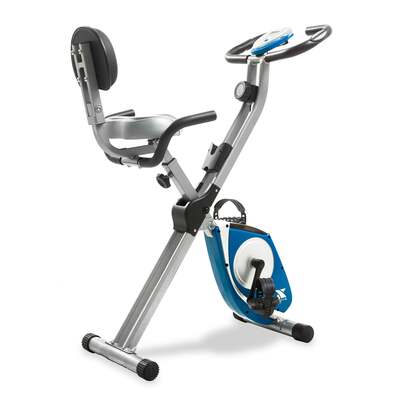
£169.00 at Sweatband · best for flats, offices and occasional use
If floor space is the deciding factor, the Xterra FB350 folds into a compact X-frame so it can be stored against a wall or in a cupboard. It has a padded seat with a cushioned lower back pad, which gives a little more support than a plain saddle, plus hand pulse sensors and an LCD for basic workout data. Be realistic about what it is: a 1.5 kg flywheel and 8 levels of manual magnetic resistance are aimed at light to moderate cardio, not hard interval training. It is a good fit for gentle daily exercise, rehabilitation-style riding or a home office.
✓ Pros
- Folding X-frame for easy storage
- Padded seat with back pad
- Hand pulse sensors
- Budget price
✕ Cons
- Light 1.5 kg flywheel limits ride smoothness at higher effort
- Only 8 manual resistance levels
4. Best spin-style bike
Spirit Fitness JB950 Johnny G Indoor Cycle
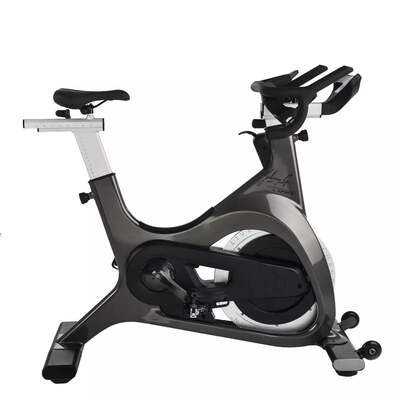
£699.00 at Sweatband · best for keen cyclists and hard interval sessions
The Spirit Fitness JB950, designed with indoor cycling pioneer Johnny G, has the heaviest flywheel in our shortlist at 21 kg. A heavy flywheel carries momentum, which is what gives spin bikes their smooth, road-like feel when you push hard or stand up out of the saddle. Resistance is computer-controlled magnetic across 20 levels, and the bike is self-powered through a generator, so you do not need it near a plug socket. A 158 kg maximum user weight is reassuring, and Bluetooth links to Myzone, Garmin Connect and Leaderboards rather than a class subscription.
✓ Pros
- 21 kg flywheel for a smooth, road-bike feel
- Self-powered, so no mains socket needed
- 158 kg maximum user weight
- Connects to Garmin Connect and Myzone
✕ Cons
- Does not list Zwift or class-app support
- Racing-style riding position is less relaxed than an upright bike
5. Best recumbent
Spirit XBR25 Recumbent Exercise Bike (2022)
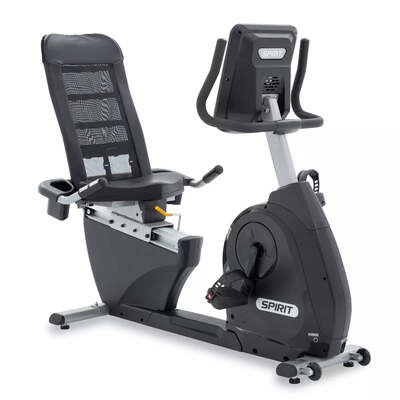
£718.56 at Sweatband · best for back support, joint comfort and older riders
A recumbent bike puts you in a reclined seat with a backrest and the pedals out in front, which takes load off the lower back and makes getting on and off easier. The Spirit XBR25 is a well-specified example from a brand often seen in commercial gyms. It has a 9 kg flywheel, 20 levels of digital magnetic resistance and six onboard workouts including interval, fat burn and heart rate control. The 7.5-inch LCD is bright and simple, and the retailer lists a 3-year home-use warranty, which is a useful reassurance at this price.
✓ Pros
- Supportive recumbent seat with backrest
- 20 levels of digital magnetic resistance
- Heart rate control programme
- 3-year home-use warranty
✕ Cons
- No app connectivity listed
- Recumbent frames take up more floor length than uprights
6. Best premium
NordicTrack 24 Studio Indoor Cycle
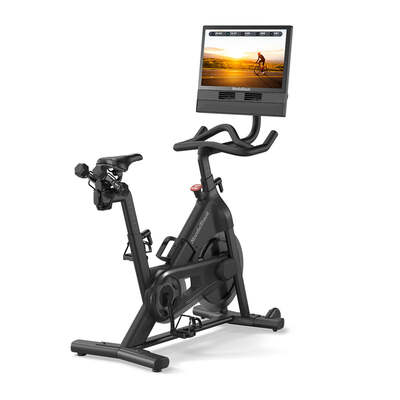
£1199.00 at Sweatband · best for studio-style classes on a built-in screen
The NordicTrack 24 Studio Cycle is for people who want a self-contained class bike without propping up a tablet. Its 24-inch pivoting HD touchscreen shows iFIT rides and turns for off-bike workouts, and the 24 levels of digital Silent Magnetic Resistance can be adjusted automatically through Follow Trainer and SmartAdjust. It includes 1.4 kg dumbbells and two-sided pedals with SPD cleats, so you can ride in cycling shoes or trainers. The full experience requires an iFIT Pro membership, so add that to the running cost. The retailer does not list the flywheel weight, so check it if ride feel is a priority.
✓ Pros
- Large 24-inch pivoting HD touchscreen
- Automatic resistance changes during classes
- Dual-sided SPD and standard pedals
- Dumbbells included
✕ Cons
- iFIT Pro membership needed for most features
- Flywheel weight not listed by the retailer
- Premium price
Upright, spin, recumbent or folding: which type suits you?
Upright exercise bikes have a wide, padded seat and a more relaxed, sit-up position. They suit general fitness and people who want a comfortable ride without a road-bike posture. Spin-style indoor cycles have a narrower saddle, a heavier flywheel and a forward-leaning position, and they suit harder interval sessions, standing climbs and cyclists training indoors.
Recumbent bikes have a backrest and the pedals in front of you. They are the most supportive option for people with back or joint concerns, older riders, or anyone who finds getting on to a high saddle awkward. Folding bikes trade ride quality for storage, so they are best for light, regular exercise where space is very limited.
Flywheel weight and why it matters
The flywheel is the weighted wheel the pedals drive. A heavier flywheel holds momentum, so the pedal stroke feels smoother and less jerky, particularly at low cadence or high effort. As a rough guide, 1 to 2 kg flywheels are typical on compact folding bikes, 6 to 10 kg is common on upright bikes, and spin bikes often use 14 kg or more.
Flywheel weight is not everything. Magnetic systems and gearing affect the feel too, so a well-designed 9 kg bike can ride nicely. But if you plan hard sessions, a heavier flywheel is a sensible thing to prioritise. Note that some retailer listings do not quote flywheel weight, and you should ask if it matters to you.
Resistance: manual, magnetic and computer-controlled
Almost all home bikes now use magnetic resistance, which is quiet and needs little maintenance compared with older friction pads. The difference is how it is adjusted. Manual magnetic resistance uses a knob or lever. Computer-controlled or digital resistance uses buttons on the console, offers more precise levels and allows apps or built-in programmes to change it for you during a workout.
More levels give finer steps between efforts rather than a harder maximum. Eight levels can feel coarse; 16 to 32 levels let you nudge intensity up gradually. If you want trainer-led classes that change resistance automatically, make sure the bike lists computer-controlled resistance and supports your chosen app.
Apps, screens and subscriptions
NordicTrack and ProForm bikes use iFIT, and Echelon bikes use the Echelon Fit app. Both offer live and on-demand classes and can adjust compatible bikes automatically, but both need a paid membership after the free trial. Bikes with a large built-in screen are usually designed around that subscription, so check the ongoing cost before buying.
If you prefer flexibility, look for bikes that list compatibility with Zwift or Kinomap, such as the Reebok FR30. A bike with a tablet holder and good built-in programmes, like the Spirit DBU40, can be used happily with no subscription at all.
Comfort, fit and space
Check the seat adjustment range and the maximum user weight before you buy, and look for a seat that adjusts forwards and backwards as well as up and down if you are particularly tall or short. Not every listing gives these figures, so ask the retailer if they are missing. A gel seat cover or padded cycling shorts can make a big difference on longer rides.
Measure the floor space, allowing room to get on and off safely. Recumbent bikes are longer than uprights, and spin bikes can be heavy to move, so look for transport wheels if you need to store the bike between sessions. A rubber mat under the bike protects floors and reduces vibration in upstairs rooms.
FAQs
Is an exercise bike or a treadmill better for home?
An exercise bike is usually quieter, smaller and gentler on the joints, which makes it easier to fit into flats and upstairs rooms. A treadmill suits people who want to walk or run, as it trains the same weight-bearing movement. If joint comfort or noise is a concern, a bike is often the more practical choice.
What is the difference between an exercise bike and an indoor cycle?
An exercise bike usually means an upright bike with a wide seat, a console and a relaxed riding position. An indoor cycle, sometimes called a spin bike, has a road-bike style saddle and handlebars, a heavier flywheel and a forward-leaning position for harder, studio-style riding.
Do I need a subscription to use a NordicTrack or ProForm bike?
No. You can ride NordicTrack and ProForm bikes using manual resistance controls without a subscription. iFIT membership adds trainer-led classes, scenic rides and automatic resistance changes. Most models include a free trial, after which the membership is a paid ongoing cost.
Is a recumbent bike as good a workout as an upright bike?
A recumbent bike can provide a very effective cardio workout, and the supported position means many people can ride for longer in comfort. Upright and spin bikes involve a little more core work and make standing efforts possible, so they suit harder interval training better.
What flywheel weight should I look for?
For general fitness on an upright bike, 6 to 10 kg is usually fine. For spin classes and hard intervals, look for 14 kg or more for a smoother, road-like feel. Light flywheels of 1 to 2 kg on folding bikes suit gentle, regular exercise rather than intense sessions.
Can I use Zwift with any exercise bike?
Not every bike. The bike needs Bluetooth and support for Zwift, often through an open standard such as FTMS. Check that the listing names Zwift or Kinomap compatibility. Bikes built around iFIT or Echelon Fit are designed primarily for those apps.
Want to see everything? Browse all cardio or read our other buying guides.
Affiliate disclosure: buychecked may earn commission from qualifying purchases made via links on this page — at no extra cost to you. Prices checked against live merchant feeds.