Home / Buying guides / Furniture
School furniture
Best classroom and school chairs in the UK
By the buychecked team · Updated 9 October 2026 · Prices refresh daily from the retailer feed
The most important thing to get right with a classroom chair is the size. A chair that is too tall leaves feet dangling and pupils perching on the front edge, and one that is too low pushes knees up and shoulders forward. UK school chairs are sold by seat height and age band, usually following the size marks in BS EN 1729, so start with the ages you are buying for and match the seat height to the table height in the room.
After that, choose the material and features for the space. Moulded polypropylene shells are the standard for general classrooms because they are tough, wipe clean and stack. Solid wood and plywood chairs suit nurseries and early years rooms. Specialist rooms need specialist seating: high chairs for labs and art rooms, and swivel task chairs for IT suites.
Our pick for most primary and secondary classrooms is the Postura Plus Classroom Chair. The NP Chair is the budget choice for general classroom use, the Beech Stacking Chairs suit primary rooms that prefer wood, and the Postura Plus High Chair and Task Chair cover labs and computer rooms. All seven are sold through Boards Direct.
Our picks at a glance
| Pick | Product | Key spec | Price today |
|---|
| Best budget | NP Chair | Polypropylene shell · steel frame · stacks 8 high · UK made | £24.00 |
| Best for labs and art rooms | Postura Plus Classroom High Chair | 560mm, 610mm or 685mm seat · welded anti-tip frame · BS EN 1729 Part 2 · stacks 5 high | £100.80 |
How we chose
We have not sat in or used these chairs ourselves. We shortlisted them by comparing the published specifications, features, price and the retailer's product information across the classroom and school seating range we list. We focused on stated seat heights and age bands, shell and frame materials, stacking capacity, any standards named in the listing such as BS EN 1729, and stated guarantees. We aimed to cover every stage from early years to secondary and specialist rooms, across a spread of prices, and avoided listing the same chair twice in different colours or sizes.
1. Best budget
NP Chair
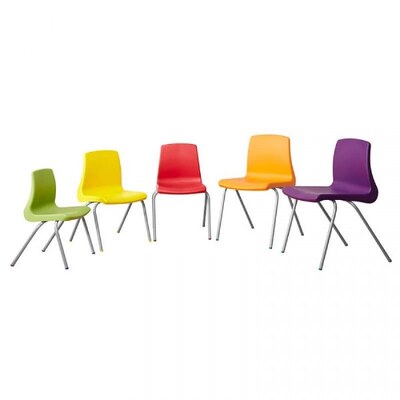
£24.00 at Boards Direct · best for kitting out whole classrooms at low cost
The NP Chair is a traditional classroom chair designed and made in the UK, and sits in the lowest price band in this guide. The retailer says it is designed to encourage correct posture with well-defined lumbar support, and it stacks up to eight high for clearing floors at the end of the day. The frame comes in a light grey or black painted finish, and five shell colours are offered for fast-track delivery, which is useful when you need chairs quickly for a new class. The listing does not name a standard, so check BS EN 1729 compliance with the retailer if your school requires it.
✓ Pros
- Lowest price band in this guide
- Stacks up to eight high
- Designed and made in the UK
✕ Cons
- No standard named in the listing
- Fewer fast-track colours than some ranges
2. Best for labs and art rooms
Postura Plus Classroom High Chair
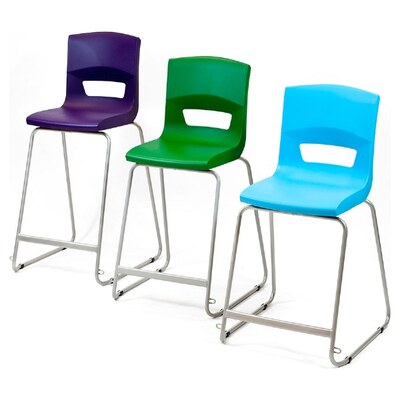
£100.80 at Boards Direct · best for science labs, art rooms and technology benches
Lab and art room benches are higher than standard desks, so pupils need a high chair rather than a stool with no back. This Postura Plus High Chair is offered in three seat heights of 560mm, 610mm and 685mm, so you can match it to your bench height. The retailer lists a fully welded anti-tip frame with a chip-resistant powder-coated finish, a non-skid base and compliance with BS EN 1729 Part 2. The anti-static polypropylene seat and back has a cut-out hand grip, and the chairs can be stacked up to five high.
✓ Pros
- Three seat heights to suit different benches
- Welded anti-tip frame
- Backrest gives more support than a lab stool
✕ Cons
- Stacks only five high
- Not suited to standard-height desks
Classroom chair sizes by age
BS EN 1729 sets out size marks for school chairs and tables, from small early years sizes up to adult sizes, and UK suppliers usually list chairs by seat height and an age band. As a rough guide, a 260mm seat suits ages three to four, about 310mm suits four to six, 350mm suits six to eight, around 380mm suits eight to eleven, around 430mm suits eleven to fourteen, and 460mm suits fourteen and over. Nursery chairs for under-threes are lower still, from about 140mm to 210mm.
Age bands are only a starting point because children of the same age vary a lot in height. If you can, measure a few pupils' lower leg length: the seat should allow feet to rest flat on the floor with the knees at roughly a right angle. Most important of all, match chair size to table size. A correctly sized chair at the wrong table height still leads to hunching. Suppliers often colour-code size marks to help staff spot mismatched furniture.
Polypropylene, wood or upholstered?
Moulded polypropylene is the default for classrooms. It is tough, light, wipes clean, does not splinter and comes in a wide range of colours. Better shells are shaped to support the lower back and have a rounded front edge, often called a waterfall edge, to reduce pressure under the thighs. Look for anti-static and stain-resistant finishes in IT rooms and art rooms.
Solid wood and plywood chairs are common in nurseries and early years rooms, where staff often prefer a natural look. They are sturdy and can be very long-lasting, but the finish can mark and they cost more per seat. Upholstered seats or seat pads add comfort for long sessions in sixth form and staff areas, but fabric is harder to keep clean in a busy classroom, so wipeable vinyl or plain polypropylene usually makes more sense for younger pupils.
Stacking, storage and cleaning
Stacking matters in rooms that double as halls, or where cleaners need clear floors each evening. Check the stated stacking height. Of the picks here, the NP Chair stacks up to eight high and the Postura Plus High Chair up to five. A trolley or dolly makes moving tall stacks far safer for staff. Handle holes or cut-out hand grips in the backrest also help pupils and staff move chairs without dragging them.
Cantilever and reverse cantilever bases can often be hung on or perched on desks at the end of the day, which is just as useful for cleaning as stacking. For hard floors, check what feet or glides are fitted, since good glides protect floors and cut scraping noise.
Standards, safety and warranties
For schools, the most useful thing to check is whether a chair states compliance with BS EN 1729. Part 1 covers functional dimensions for each size mark and Part 2 covers safety, strength and stability. Some ranges also mention independent FIRA certification. If a listing does not mention a standard, ask the supplier before ordering, especially for a whole-school purchase.
Look for rounded corners and edges for younger children, anti-tip frames on high chairs, and a fully welded rather than bolted frame where pupils are likely to rock. Warranties vary widely. In this guide they run from five years on the beech stacking chairs to ten years on the Postura Plus classroom chair, and a longer warranty is a good sign that a chair is built for school use.
FAQs
What size chair does a primary school child need?
As a rough guide, children aged four to six need around a 310mm seat, six to eight around 350mm, and eight to eleven around 380mm. Children vary, so check that feet rest flat on the floor and match the chair to the table height.
What is BS EN 1729?
BS EN 1729 is the European standard for school chairs and tables. Part 1 sets out functional sizes for each age group and Part 2 covers safety, strength and stability. Many classroom chairs state compliance in their product listings.
Are polypropylene chairs good for schools?
Yes. Polypropylene is tough, light, easy to wipe clean and does not splinter, which is why it is the standard material for classroom chairs. Shaped shells can also support good posture.
What chairs are best for science labs?
Lab benches are higher than desks, so you need a high chair with a seat height to suit the bench, often between 560mm and 685mm. Look for an anti-tip frame and a wipe-clean seat.
How high should classroom chairs stack?
It depends on the chair. Typical school chairs stack between five and twelve high. Higher stacks save space but are harder to move, so use a stacking trolley for tall stacks.
Should nursery chairs be wood or plastic?
Both work. Wooden and plywood chairs are sturdy and popular in early years rooms, while polypropylene is lighter, cheaper and easier to clean. Whichever you choose, look for rounded edges and the right seat height for the age group.
Want to see everything? Browse all furniture or read our other buying guides.
Affiliate disclosure: buychecked may earn commission from qualifying purchases made via links on this page — at no extra cost to you. Prices checked against live merchant feeds.